
Cooking red seabream
Japanese dishes using マダイ, with preparation guidance and the original dish photographs.
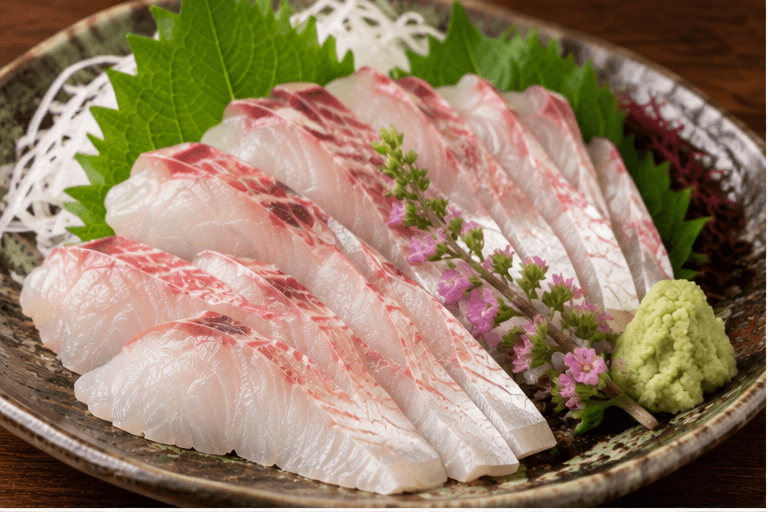
Sashimi / thin-sliced raw fish
A traditional way to appreciate texture. Freshness alone does not establish that a catch is safe to eat raw.
- Have species identification and suitability for raw consumption assessed by a qualified fish professional.
- Use professional parasite-control and cold-chain procedures; this is not a home raw-fish safety protocol.
- For an uncertain recreational catch, choose an appropriate thoroughly cooked dish instead.
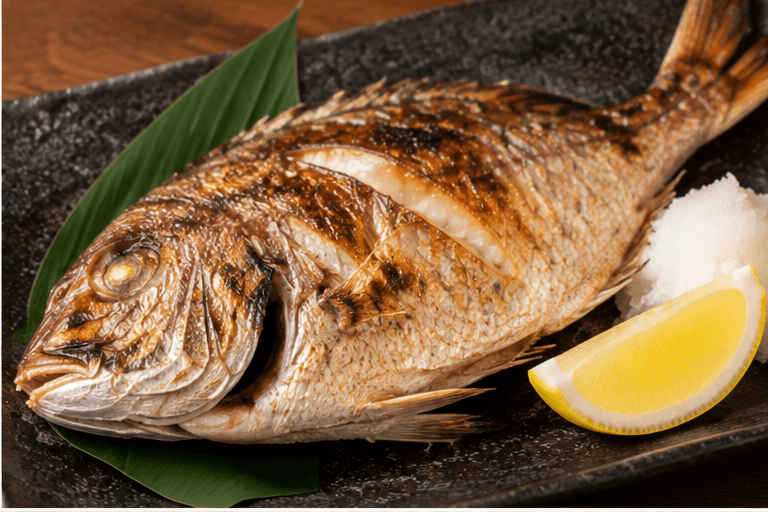
Shioyaki — salt-grilled
Salt and dry surface skin bring out the character of the fish without a heavy sauce.
- Scale where needed, remove gills and guts, clean briefly and dry carefully. For squid, clean and portion the mantle instead.
- Salt lightly and wipe away released moisture.
- Grill until cooked through, turning carefully; serve with citrus.
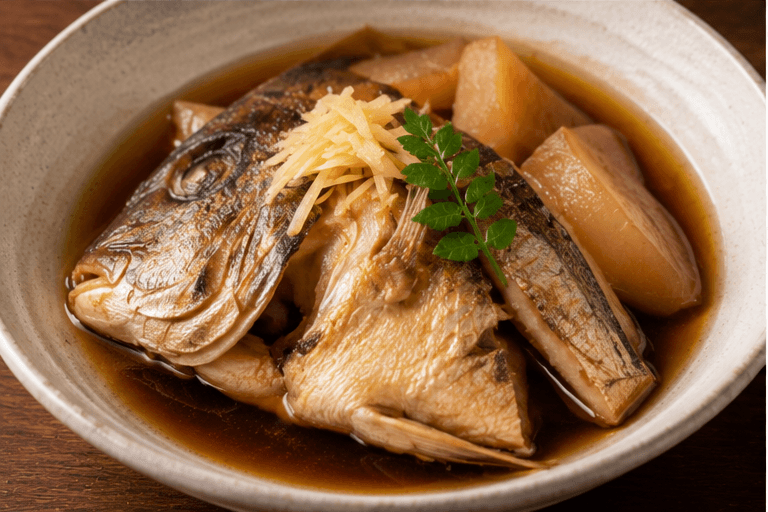
Nitsuke — soy-simmered
Gentle simmering keeps delicate flesh together while seasoning it with soy, sake and ginger.
- Clean the fish and score thick skin where appropriate.
- Bring water, soy sauce, sake and a little sugar to a simmer; add the fish and ginger.
- Cook through with a drop lid or spooned-over sauce, moving the fish as little as possible.
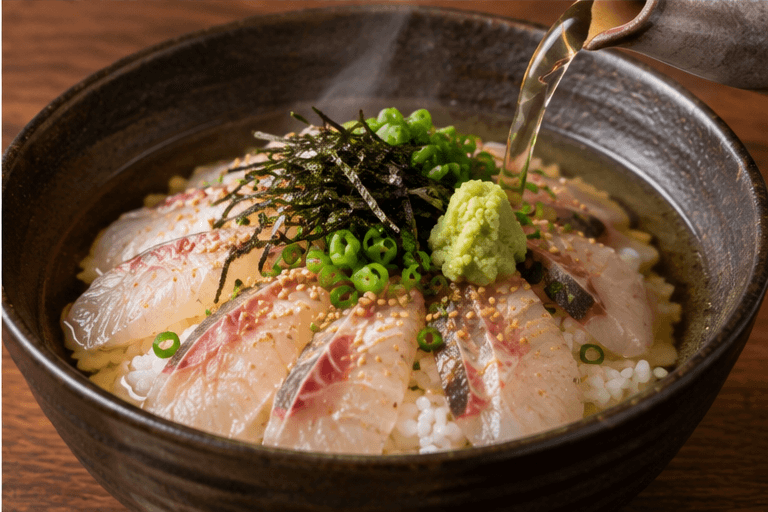
Tai chazuke — seabream over rice
Seabream is served over rice with broth or tea. A cooked-fish version is practical for recreational catches.
- Cook boneless seabream portions through.
- Arrange over warm rice with sesame and nori.
- Pour over hot stock or tea and serve promptly; pouring hot liquid over raw fish alone is not a reliable cooking step.