
Cooking japanese amberjack
Japanese dishes using ブリ, with preparation guidance and the original dish photographs.
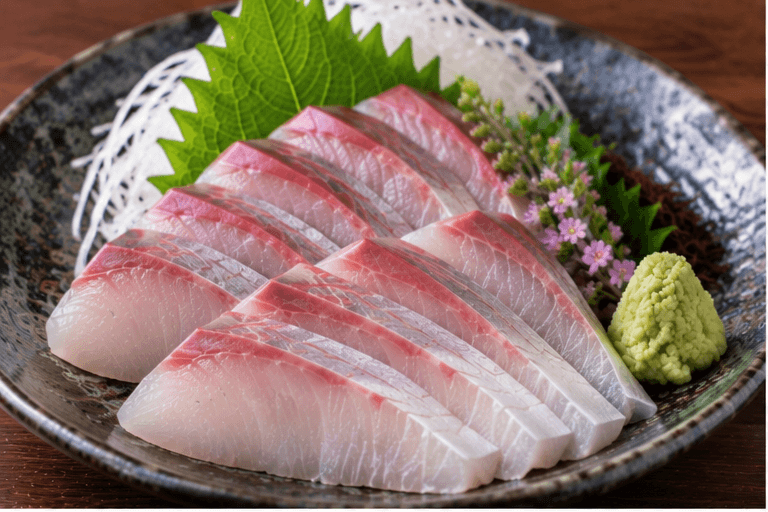
Sashimi / thin-sliced raw fish
A traditional way to appreciate texture. Freshness alone does not establish that a catch is safe to eat raw.
- Have species identification and suitability for raw consumption assessed by a qualified fish professional.
- Use professional parasite-control and cold-chain procedures; this is not a home raw-fish safety protocol.
- For an uncertain recreational catch, choose an appropriate thoroughly cooked dish instead.
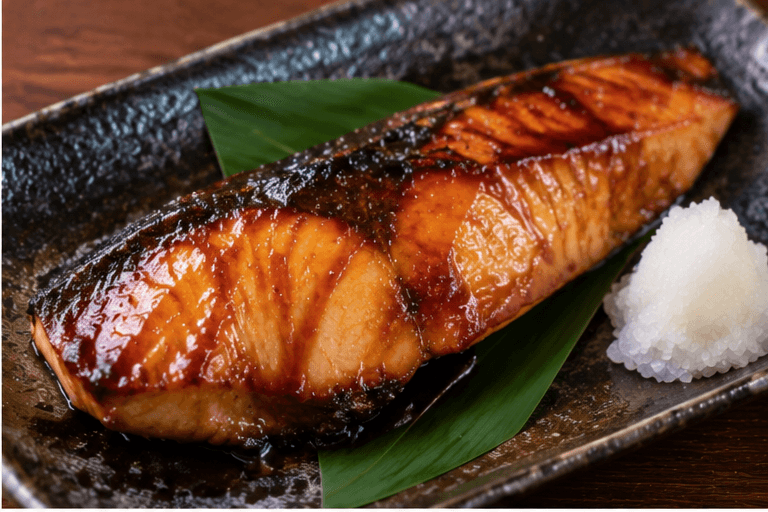
Buri teriyaki
Amberjack steaks glazed with a sweet soy sauce.
- Dry boneless steaks and season lightly.
- Pan-cook both sides until cooked through.
- Add soy sauce, mirin and sake, then reduce briefly to coat without burning.
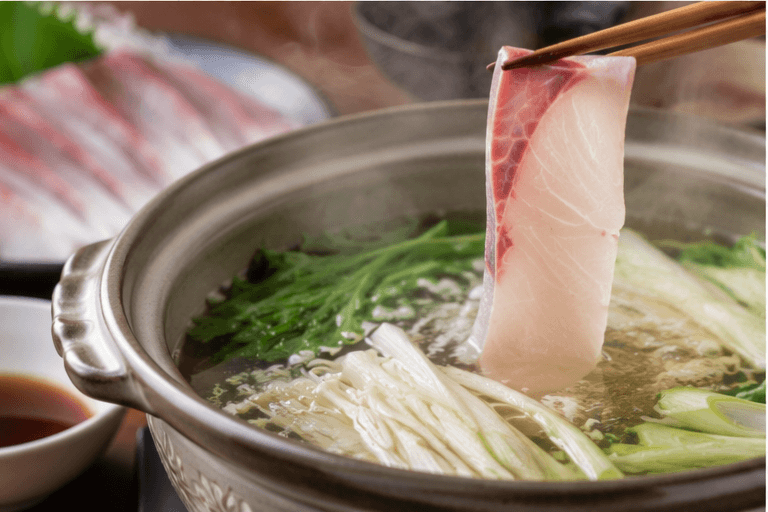
Buri shabu-shabu
Thin amberjack slices are cooked in a light broth and served with dipping sauce.
- Prepare thin boneless slices and separate utensils for raw and cooked food.
- Bring kombu broth and vegetables to a simmer.
- Cook each slice through; do not rely on a very brief dip for an uncertain catch.
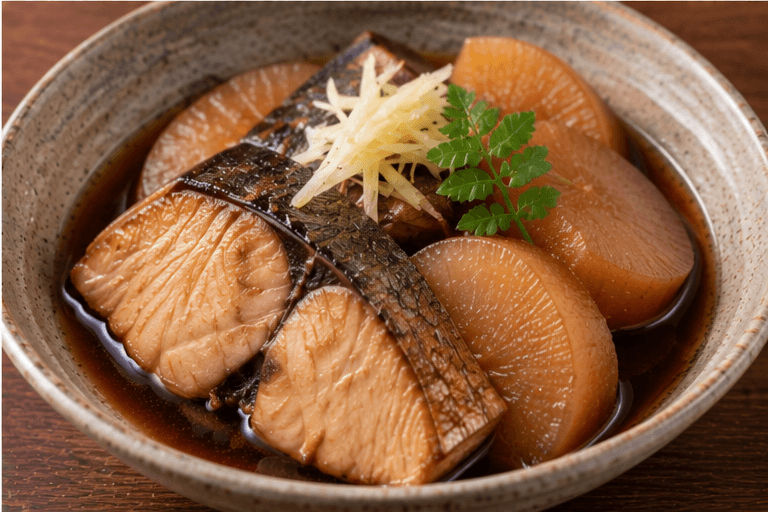
Buri daikon — amberjack with radish
Fish and daikon absorb a ginger-scented soy broth.
- Cut daikon and pre-cook until beginning to soften.
- Clean fish portions and briefly blanch and rinse away surface scum.
- Simmer with daikon, ginger, water, soy sauce and sake until fish is cooked and radish tender.