
Cooking japanese horse mackerel
Japanese dishes using マアジ, with preparation guidance and the original dish photographs.
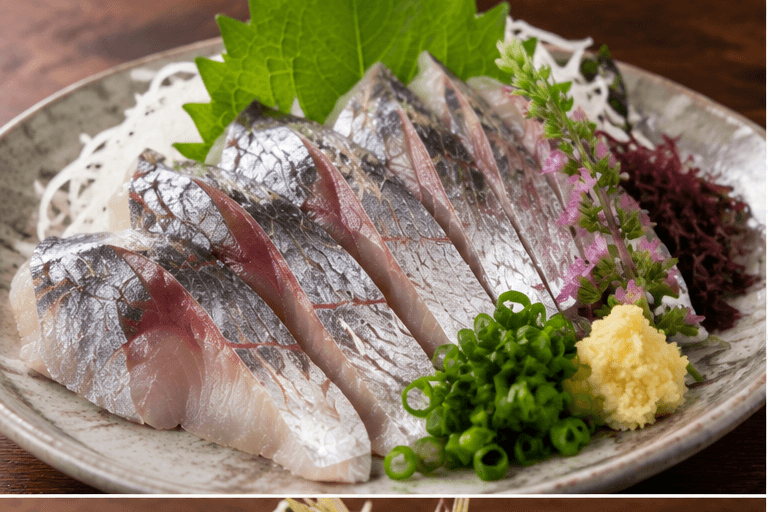
Sashimi / thin-sliced raw fish
A traditional way to appreciate texture. Freshness alone does not establish that a catch is safe to eat raw.
- Have species identification and suitability for raw consumption assessed by a qualified fish professional.
- Use professional parasite-control and cold-chain procedures; this is not a home raw-fish safety protocol.
- For an uncertain recreational catch, choose an appropriate thoroughly cooked dish instead.
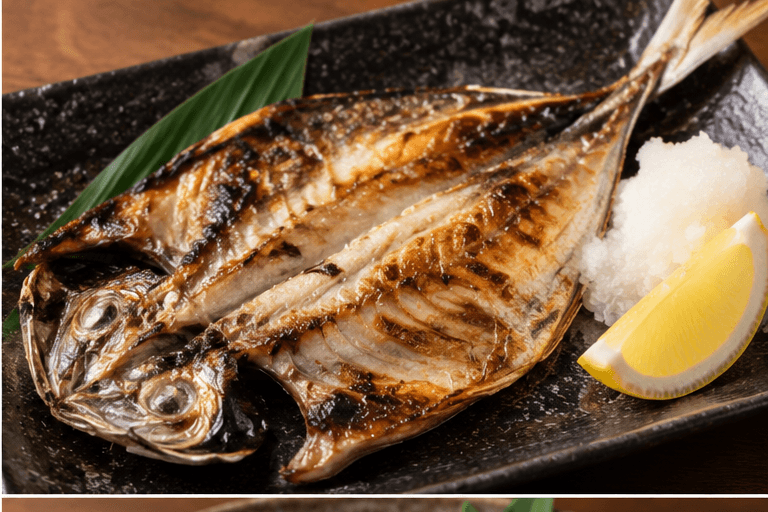
Shioyaki — salt-grilled
Salt and dry surface skin bring out the character of the fish without a heavy sauce.
- Scale where needed, remove gills and guts, clean briefly and dry carefully. For squid, clean and portion the mantle instead.
- Salt lightly and wipe away released moisture.
- Grill until cooked through, turning carefully; serve with citrus.
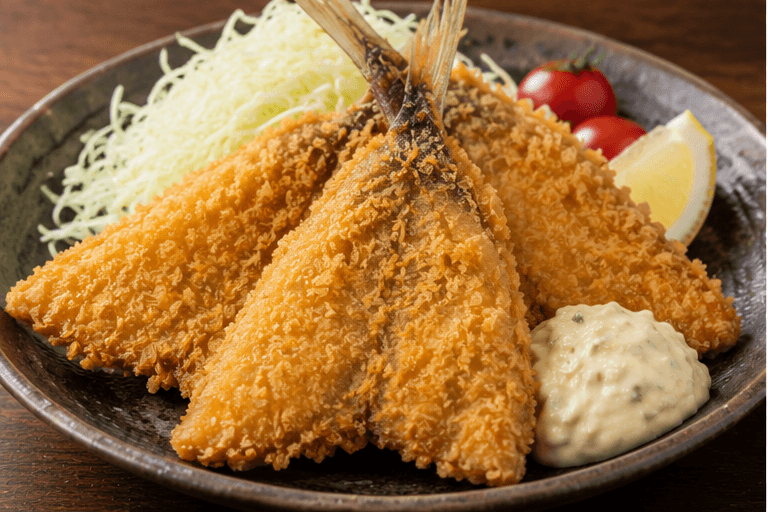
Aji fry — breaded horse mackerel
Boned horse mackerel in a crisp breadcrumb coating.
- Remove scutes, head, innards and bones; open the fish or use fillets.
- Dry, season lightly, then coat with flour, beaten egg and panko.
- Fry until cooked through and drain; check carefully for remaining bones when serving children.
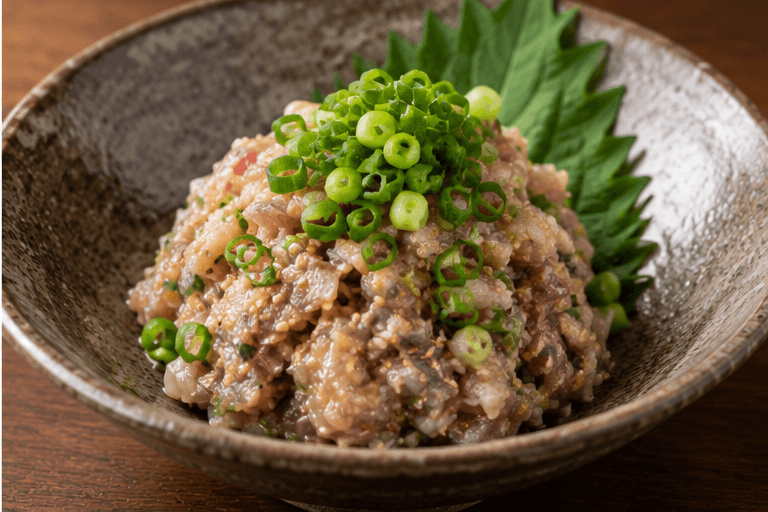
Namerō — chopped fish with miso
A regional raw-fish preparation with miso, ginger and aromatic herbs. Miso does not make raw fish parasite-safe.
- Use only fish professionally assessed and prepared for raw consumption.
- The traditional preparation chops the fish with miso and aromatics.
- Keep it chilled; use a thoroughly cooked preparation if raw-fish suitability is uncertain.